
I gave a short keynote on ownership culture at InnoEnergy's Business Booster conference this week. Added bonus: the venue turned out to be a ten-minute bike ride from our new home.
Two things worth your time this week:
The Intentional Organization (Audiobook) by Mathias Meyer & Sara Hicks — read more below.
I didn't believe in agentic commerce… until I used Instinct to buy a car. Game changer, also in lots of other use cases. DM me for an invite code.
The Story: Gravity doesn't negotiate
Consequences have been on my mind for weeks. It started with my own parenting. My children are two and five years old now, and at times they turn into unruly rascals. (I don't blame them 😃)
I love them. I also want to give them clear guidance and clear rules, and I want them to understand that breaking a rule will have a consequence, even though I love them all the same.
Being consistent about that didn't come naturally to me. Stating a rule took me a second. Holding it once they pushed back took me years — in fact, I'm still working on it.
If I say that A leads to B, then B has to happen. Every time. Otherwise my children learn that B is a mood, that the rule depends on how tired I am, and that most things are negotiable if you push long enough.
Children learn to be careful on the climbing frame because gravity doesn't negotiate. That reliability is what makes the world legible to them, what provides orientation. It gives them agency. They can start to take conscious risks, exactly because they know roughly what follows.
Being a parent is a leadership role, even if I'd never describe it that way at a dinner party. And the job is the same: be credible, be reliable, and absorb the discomfort of following through.
Then it started arriving from every direction at once. Clients asking themselves what a strategic shift actually means for their organisation, whether to restructure, grow, or shrink. Clients asking whether to fire someone, and whether anything short of firing them is worth trying first. And a few weeks ago, someone put me on live television to comment on the chancellor's leadership.
The question underneath remains the same:
What are the consequences, really?
Nobody could answer that. Not my clients, not the people asking me on air, and — apparently — not the chancellor.
The Insight: Con-sequence
There is a sequence implied in the word con-sequence. A leads to B, same as with my children. But for most of us, consequences are binary. Zero or one. Stay on the team, or get fired.
And sadly, that's the entire vocabulary most of us have. Nothing, or you fire them. Because the only consequence anyone can picture is the largest one, almost nothing happens at all. The leaders I meet stay paralyzed for months, then jerk into action and take drastic measures. Their teams are dumbfounded and wonder where that came from. It feels jumpy and inconsistent, but it is the sign of an undifferentiated mental model — a leadership principle nobody ever worked out.
Consequences are not only about punishment and a decision about membership. A differentiated model has more settings than two, and a leader who holds one can reach for the small consequences long before the large one is on the table.
Punishment is the wrong instrument for most of those settings. Mathias Meyer and Sara Hicks make that case in The Intentional Organization, and this is the passage I keep coming back to:

The Intentional Organization, Chap. 6
All of it is part of the sequence, and expectation setting is the first step. That one sits with you. Most of the time, when you don't get the result you wanted, it's because you never made clear what you expected.
Feedback and coaching are part of the consequence too. We hear the word and think punishment, and there is a long run of steps before anyone looks at role design or team composition. Those come very late.

binary model vs. sequence
Then the sequence stops. Expectations were clear, the feedback was given, the coaching didn't land, and the person still isn't in the right place. The chapter goes quiet there. Role design and team composition never come up in it.
That's where I'd push back, and it's the bridge the whole argument needs. A sequence can end in renegotiating how you work together, and it can end in not working together any more. Both are still the same sequence. We file them somewhere else, under punishment, and that filing is what leaves the gap.
The chapter is on the audiobook if you want to hear them make the case themselves:
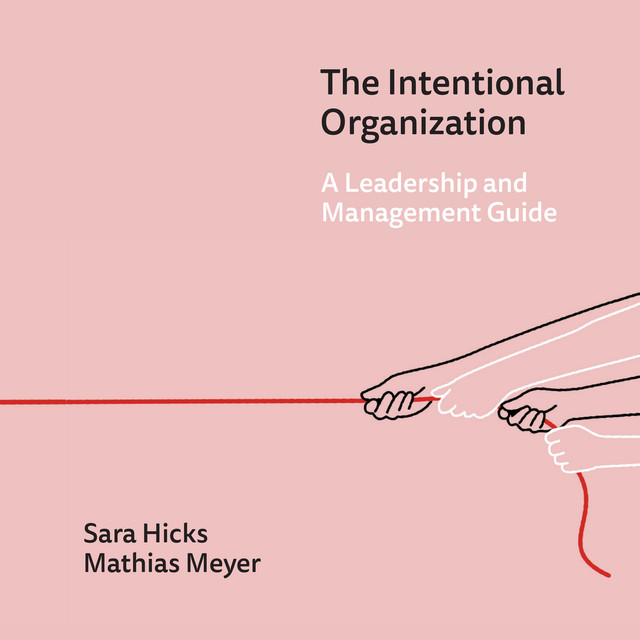
What I would add to the chapter from Intentional Organization: moving someone out of a role they can't do and into one they can is very much a legit consequence. Taking a budget or a team away from them is one. Firing them is the last one on the list. Mathias and Sara would file the first two under good management.
I file all three under the same sequence.
Handling it this way is in your own interest. As a CEO you are measured on the outcome your team produces. Nobody outside cares who was to blame on the inside. Blame buys you nothing, and firing fast buys you nothing either.
If you are in the "hire slow, fire fast" camp: don't worry, we are aligned — that maxim is about how long you take, not how many steps you have. Your sequence can run in six weeks.
So here is my challenge to you: build a high consequence organisation. One where everyone knows exactly where they stand, and what the consequences are, at every point in time.
In practice that means the person who misses can tell you what happens next, without asking you. The deadline moves once and only once. The scope gets cut before the role does, and the role gets redrawn before anybody is let go. None of it arrives as a surprise, because all of it was said while things were still going fine.
Leave it unsaid and whatever eventually happens looks arbitrary. Nobody feels safe under a rule nobody wrote down, and with so little else feeling settled right now, a rule that holds is what people reach for.
Your Quick Win: Write the whole sequence for one project
Take one project somebody on your team owns. Start at the beginning: have you told them what you expect in words they could repeat back to you? That's where most of these come apart, and checking costs you nothing.
Then write out the rest of the sequence, before anything slips. Feedback, and a date to look again. Coaching or mentoring, and who provides it. Renegotiate the deadline, then the scope. A colleague helping them on it. The role gets redrawn. Every step named, in order, so both of you know which one you're standing on.
Then show them the list. Better: ask them first. What should happen if this doesn't work?
Ten minutes of writing. Then you have to do it.
Yours,

Julius Bachmann
I help CEOs of scaling companies (100+ team, 8-figure revenue) navigate complexity with clarity – integrating strategy, leadership architecture, and personal mastery to build businesses that matter without burning out.
↪️ Ready to find your one lever? Book a call here.
If this email was forwarded, click here to subscribe to the newsletter.
